

GPU Servers
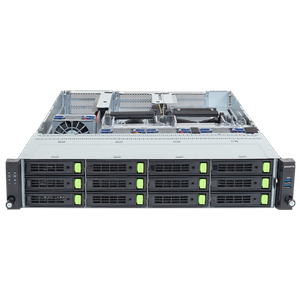
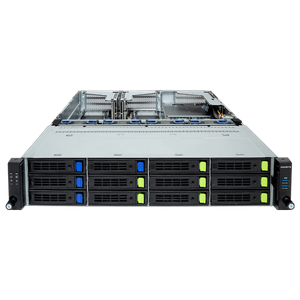
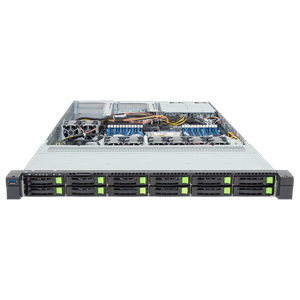
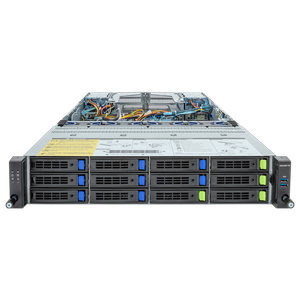
Buy GPU Servers – Multi-GPU for HPC, Rendering, and Simulation
8.999
455.999


GPU server
1 - 13 of 13 Products
NEED HELP MAKING
A CHOICE?
Schedule an appointment with one of our
B2B consultants - it’s quick, free, and with no obligation.
GPU Servers for HPC, Rendering, and Simulation
Are you looking for the best GPU performance for scientific computing, simulation, and GPU rendering in your company? Then our GPU server is the perfect choice for you. We’ve tested every component down to the last detail and conducted our own benchmarks to offer you the best systems for HPC, simulation, and rendering.
What are the requirements for a GPU server?
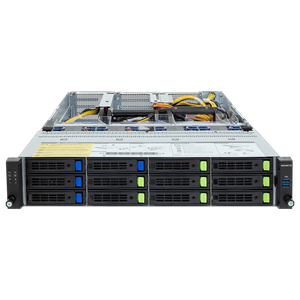
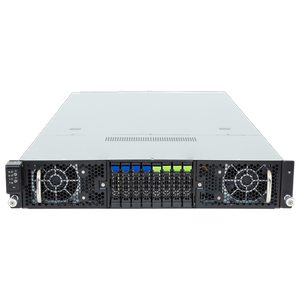
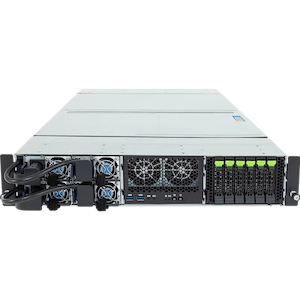
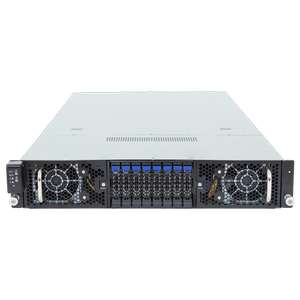
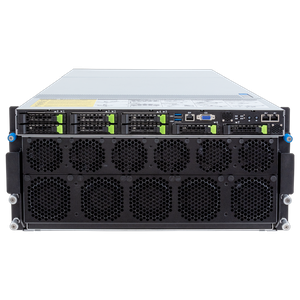
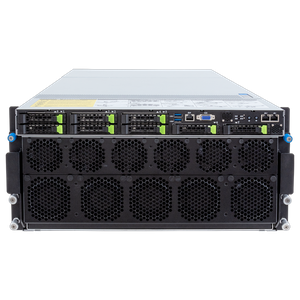
For the best performance, we recommend installing NVIDIA graphics cards. These currently offer the best GPU performance for complex calculations. Whether for scientific simulations, fluid dynamics, or GPU rendering, our GPU servers from Gigabyte and Supermicro deliver the best performance in these applications. With up to eight configurable NVIDIA graphics cards in 2U, 4U, or 5U chassis, you’ll be perfectly equipped to handle even the most demanding computing requirements. With every GPU server, you have the choice of the latest data center graphics cards, such as the NVIDIA H200.
GPU Server or AI Server?
Unlike our AI server, which specializes in training, fine-tuning, and inference for neural networks and large language models, our GPU server focuses on traditional HPC applications: scientific computing, simulation, and GPU rendering. If, on the other hand, you’re planning an AI or LLM project, you’ll find the more suitable systems there.
Which graphics cards are suitable for the optimal GPU server?
The latest high-performance graphics cards, such as the NVIDIA models from the Hopper and Blackwell generations, form the foundation for high-performance GPU servers. Large video memory, high bandwidth, and a high number of floating-point operations are also essential. In our GPU server configurator, you’ll find the latest graphics cards (NVIDIA L40S, H100, H200) that were specifically designed for high-performance computing.
Outstanding HPC Performance with the NVIDIA H200
Thanks to the Hopper architecture and 141 GB of HBM3e memory with a bandwidth of 4.8 TB/s, the NVIDIA H200 Tensor Core graphics card is one of the most powerful options for memory-intensive HPC applications. This gives it nearly twice the memory capacity and 1.4 times the memory bandwidth compared to the NVIDIA H100. As a result, your simulations and scientific calculations will run noticeably faster and more efficiently.
For memory-intensive HPC applications such as simulations and scientific research, the H200 achieves results up to 110 times faster than pure CPU systems, according to NVIDIA’s specifications—for example, in quantum simulations (MILC benchmark). The higher memory bandwidth ensures that data can be efficiently retrieved and processed, thereby reducing bottlenecks in complex processing.
GPU servers with the NVIDIA H200 are also energy-efficient: they offer better energy efficiency and lower total cost of ownership, making them the ideal choice for data centers and enterprises looking to reduce operating costs while maximizing their computing power. With NVIDIA H200 servers, you can also design computing resources to be flexible and scalable, whether you’re using a single GPU or multiple GPUs in a cluster.
What other components are suitable for a GPU server solution?
Intel Xeon and AMD EPYC processors are particularly well-suited for GPU systems, as they support key server features such as ECC memory and virtualization. When selecting a CPU, you should prioritize a high clock speed, since the actual computations are performed by the graphics cards and the number of CPU cores is usually of secondary importance.
The amount of RAM required depends heavily on the intended use case. While a small rendering server with four graphics cards performs well with just 64 GB of RAM, a solution with up to eight graphics cards may require 256 GB of RAM or more. To ensure system stability, we recommend using only ECC RAM: This automatically detects and corrects 1-bit errors, thereby preventing outages and data corruption.
For a GPU solution, the ability to quickly replace components via hot-swap is also important, as this reduces downtime. Redundant power supplies are practically a must, since the server can continue running even if one module fails.
Our recommendations for GPU server systems:
| Application Area | Software | Graphics Card |
| GPU Rendering | Blender, OctaneRender, Redshift, V-Ray | Starting with 1x NVIDIA RTX PRO 6000 |
| Scientific Simulation (CFD, Molecular Dynamics) | ANSYS, OpenFOAM, GROMACS | 2x to 4x NVIDIA H200 |
| Enterprise HPC clusters with NVLink | Quantum simulations, weather models, large FEM models | Up to 8x NVIDIA H200 |
You can find an overview of all server categories by application under Servers by Application.
If you’re unsure which GPU configuration or CPU platform is right for your project, our Server Buying Guide will help you make the right decision.
Any questions? – We’re here to help!
Have you lost track of the vast selection, or do you have specific requirements for your GPU project? No problem—our sales team is here to help and will gladly advise you on any questions! You can reach us by phone, email, or via live chat in our store. You’re also welcome to contact our B2B team.
In the Server Configurator, you can configure your system according to your individual preferences.