

Database Server
Buy Database Servers: Highly Efficient Systems for Demanding Workloads
7.249
9.999
Datenbank-Server
1 - 8 of 8 Products
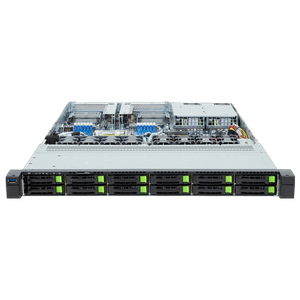
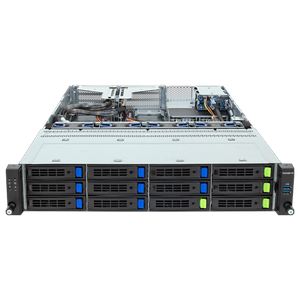
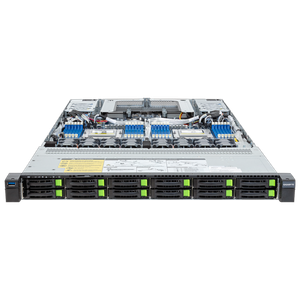
Configure the database server for fast response times
Databases have different technical requirements than virtually any other server application in your company: What matters are high IOPS for many small read and write operations, large RAM capacity so that frequently accessed data is stored in the cache rather than on the drive, and high-clock-speed processors for fast response times to individual queries. We configure our database servers precisely for this: fast NVMe SSDs—in a RAID array upon request for performance and redundancy—generous ECC RAM to prevent bit errors during long runs, and processors whose clock speed and core profile are tailored to your database system.
From project launch to business-critical instances
For smaller instances, such as an internal ERP system or a web application, a high-clock-speed single-processor system with NVMe mirroring is sufficient. As the load grows, dual-socket systems scale with more cores for parallel queries and memory expansion into the terabyte range. For business-critical databases, redundant power supplies and a replication or backup strategy should be part of the design from the very beginning.
Whether clock speed or the number of cores is more important depends on the database system: Transaction-heavy systems such as MySQL or PostgreSQL in OLTP mode benefit greatly from high clock speeds, since individual queries are often not parallelized. Analytical workloads and data warehouse applications with complex queries over large data sets, on the other hand, make better use of more cores for parallel processing. For systems like Microsoft SQL Server or Oracle, it’s also worth looking into per-core licensing before you determine the number of cores.
High Availability and RAID for Databases
For high availability, you can opt to run your database in a cluster consisting of at least two servers: If one system fails, the replication partner seamlessly takes over operations. For RAID arrays, especially with database workloads, RAID 10 is recommended, as it combines high write speeds with fault tolerance, whereas capacity-only RAIDs like RAID 5 can become a bottleneck for databases with very high write loads. For network connectivity, a standard Gigabit connection is sufficient for most database servers; however, for very high query volumes with many concurrent users, a 10-Gigabit connection is worthwhile.
You can offload large amounts of unstructured data that do not belong in the database itself to a storage server; the Servers by Application category provides an overview.
Recommendation by Workload Type
| Database Type | Usage Patterns | CPU Focus | Recommendation |
| OLTP (MySQL, PostgreSQL) | Many small transactions | High clock speed | Single-socket, NVMe RAID |
| Data Warehouse / Analytics | Complex queries on large data sets | Many cores | Dual-socket, more RAM |
| Business-critical instance (SQL Server, Oracle) | High availability required | Balanced | Cluster configuration |
Configure your custom database server
If you’re still deciding which server type is right for your needs, our server buying guide can help with specific recommendations tailored to your use case. Business customers and public institutions also benefit from dedicated account managers, quotes for bids, purchase on account, or leasing options. Have you lost track of the vast selection, or do you have specific requirements for your database project? No problem—our sales team is here to help and will gladly advise you on any questions you may have! You can reach us by phone, email, or via live chat in our store. You’re also welcome to contact our B2B team.
In the Server Configurator, you can configure your system according to your individual needs.