
3 year warranty
Lifetime support
30-day return policy

Discover our new Kick-Ass Systems 

AI Training Workstations

AI Training Workstations

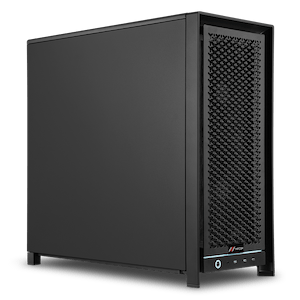
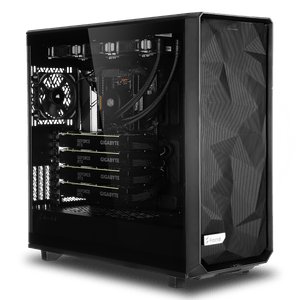
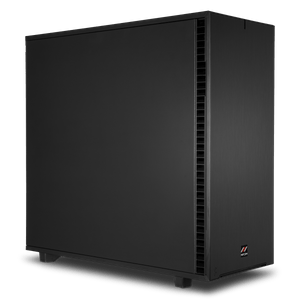
AI Training Workstations: Maximum Computing Power for Deep Learning & Neural Networks

KI Training Workstations

Maximum performance for training completely new AI models!

If off-the-shelf base models no longer meet your needs and you have to design and train your own neural networks, you’ll need hardware that makes no compromises. Our AI training workstations are designed for the most demanding disciplines of deep learning. They offer the scalability needed to process massive datasets highly efficiently and train complex model architectures. Whether it’s large language models (LLMs), computer vision, or scientific simulations—with multi-GPU configurations and maximum memory bandwidth, you’ll push the boundaries of what’s possible right at your workstation.


Use Cases: Custom Models for Research, Industry, and Science


Full-model training is the pinnacle of AI development. Typical use cases for these high-end systems include:

  • Development of proprietary base models: Train your own language or multimodal models on your exclusive datasets to create an AI that possesses unique expert knowledge not available to any public model.
  • Medical Diagnosis & Life Sciences: Create highly specialized neural networks for analyzing MRI data, genome sequencing, or protein folding, where the highest precision and the protection of sensitive research data are top priorities.
  • Autonomous Systems & Robotics: Train complex perception and decision-making models for autonomous navigation or industrial robotics using massive amounts of sensor data and simulation environments.


The System Architecture: GPU Computing Power Meets Efficient Data Management


Successful model training requires a perfectly coordinated hardware hierarchy. In our workstations, the components assume clearly defined roles to guarantee maximum efficiency:

  • GPU as a Mathematical Powerhouse: The actual computational load—billions of matrix multiplications—rests almost entirely on the tensor cores of your graphics cards. Here, the number of GPUs and their VRAM determine the maximum batch size and the complexity of the model.
  • CPU as the conductor of the data pipeline: In deep learning training, the CPU is the critical link. It is responsible for preprocessing the raw data (decoding, scaling, tokenizing) and ensures that the GPUs are constantly fed with data. Our systems use processors with a high number of PCIe lanes to connect each GPU at full bandwidth and prevent “GPU starvation” (idle graphics cards).
  • PCIe 5.0 & Storage Connectivity: To move the massive amounts of data between fast NVMe storage, system RAM, and the graphics cluster’s VRAM, we rely on state-of-the-art interface standards to ensure minimal latency.


Technical Benchmarks: Throughput During Full-Model Training


Training performance is primarily determined by data throughput. Our multi-GPU systems achieve impressive results with standard reference models:

  • ResNet-50 (image classification – training with the ImageNet dataset):
    • Quad-GPU setup (4x Nvidia RTX 5090): approx. 18,000 to 22,000 images per second.
    • Dual-GPU setup (2x Nvidia RTX PRO 6000 – 192 GB combined VRAM): Enables training with extremely large batch sizes for more stable convergence on complex datasets.
  • Tiny-LLM (1B parameters – full-model training):
    • Multi-GPU workstation (4x Nvidia RTX PRO 6000): Enables the processing of billions of tokens in just a few days on-premises, rather than on expensive cloud instances.


Hardware Recommendations: Scalable Performance for Deep Learning


For demanding deep learning training, we recommend configurations designed for maximum parallelization and memory capacity:

  • High-End Training Workstations (Focus on Maximum Batch Sizes):
    • Graphics Cards: We primarily rely on the Nvidia RTX PRO 6000 here. With 96 GB of VRAM per card, it is the ultimate tool for training large models. In multi-GPU setups (up to 4 cards), you’ll have up to 384 GB of dedicated graphics memory at your disposal.
    • Processor: AMD Ryzen™ Threadripper™ PRO or Intel® Xeon® processors with 128 PCIe lanes to drive up to four high-end graphics cards with full x16 connectivity (PCIe 5.0).
    • Memory: 512 GB to 2 TB of DDR5 ECC RAM for buffering massive datasets.


The MIFCOM Promise: Maximum Stability in 24/7 Continuous Operation


A complex model training session can take days or even weeks, during which your system operates under continuous full load. Even the slightest instability would cause the training to abort. That’s why our training workstations rely on industrial-grade cooling standards, redundant power supplies, and a carefully selected range of components. Every system undergoes an extremely rigorous stress test lasting several days before it reaches your facility.


Configure your AI training workstation now at MIFCOM and create your own highly specialized AI models on your own hardware.